
SNAP-Ed Helps Picky Eater and Supports Healthy School Snacks

SNAP-Ed Partners with Breastfeed Durham

SNAP-Ed Shows College Student Healthy Eating on a Budget

SNAP-Ed Fosters Love of Fruit and Veg for Kids in the Garden

SNAP-Ed Creates Foundation for Healthy Eating

SNAP-Ed Helps Those Affected by Multiple Sclerosis

Pre-K Students and Families

North Carolina Teacher

SNAP-Ed Partnership Creates Picture Recipe Book

North Carolina Mom

Ohio SNAP-Ed Partner

Mental Health Center in Ohio
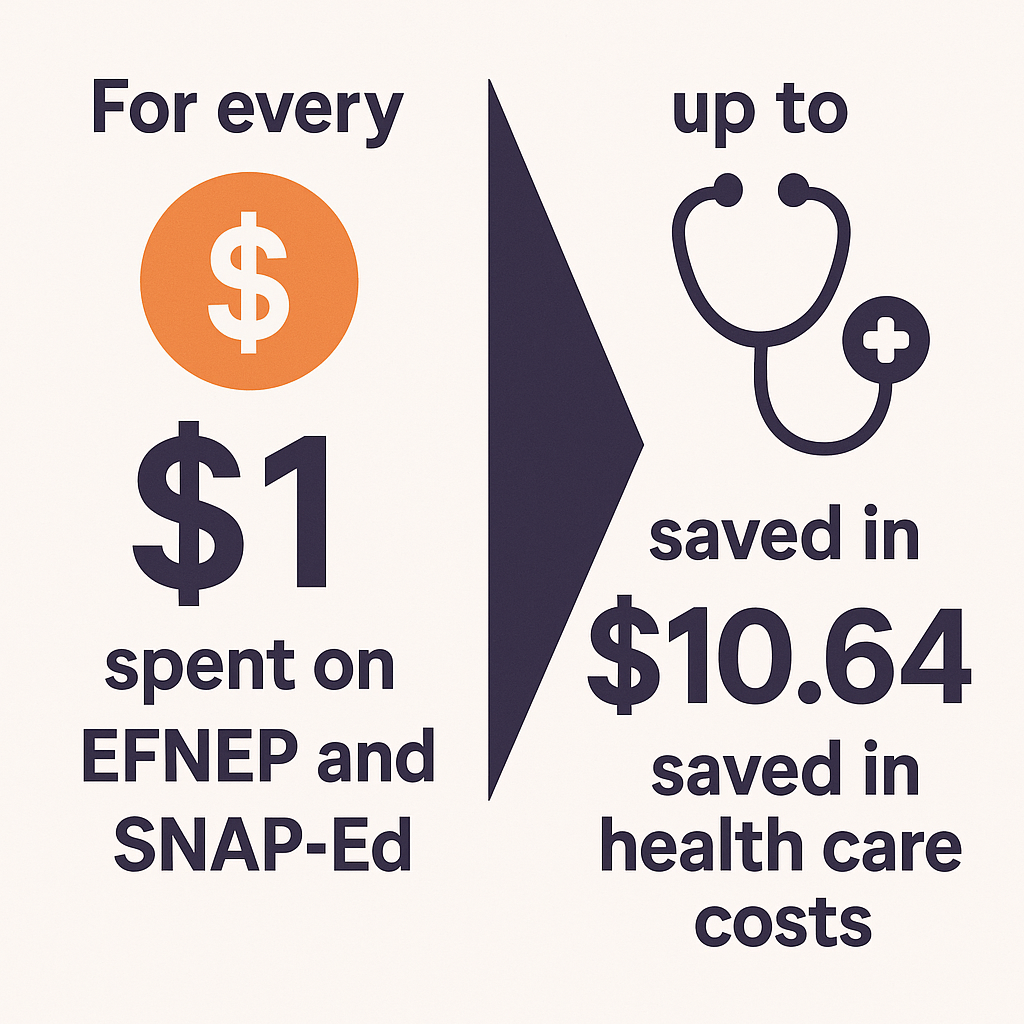
LT17: Health Care Cost Savings
“Existing studies show that for every $1 spent to implement programs such as EFNEP and SNAP-Ed education programs, up to $10.64 is saved in health care costs.5 These studies pre-date the provisions of HHFKA and SNAP-Ed's expanded reach through comprehensive scope of services, thus we anticipate potential health care costs savings to be even greater.”
SNAP-Ed (Supplemental Nutrition Assistance Program-Education) Increases Long-Term Food Security among Indiana Households with Children in a Randomized Controlled Study
Rivera, R. L., Maulding, M. K., Abbott, A. R., Craig, B. A., & Eicher-Miller, H. A. (2016). SNAP-Ed (Supplemental Nutrition Assistance Program-Education) Increases Long-Term Food Security among Indiana Households with Children in a Randomized Controlled Study. The Journal of nutrition, 146(11), 2375–2382. https://doi.org/10.3945/jn.116.231373
The SNAP-Ed Evaluation Framework: demonstrating the impact of a national framework for obesity prevention in low-income populations
This article introduces and describes the benefits of the newly developed SNAP-Ed Evaluation Framework (Framework) and companion Interpretive Guide to consistently measure SNAP-Ed outcomes across different settings
Effect of Supplemental Nutrition Assistance Program–Education (SNAP-Ed) on food security and dietary outcomes
This narrative review summarizes current investigations of SNAP-Ed’s effectiveness at improving food security and dietary outcomes, and it can help inform future policy and implementation of the program.
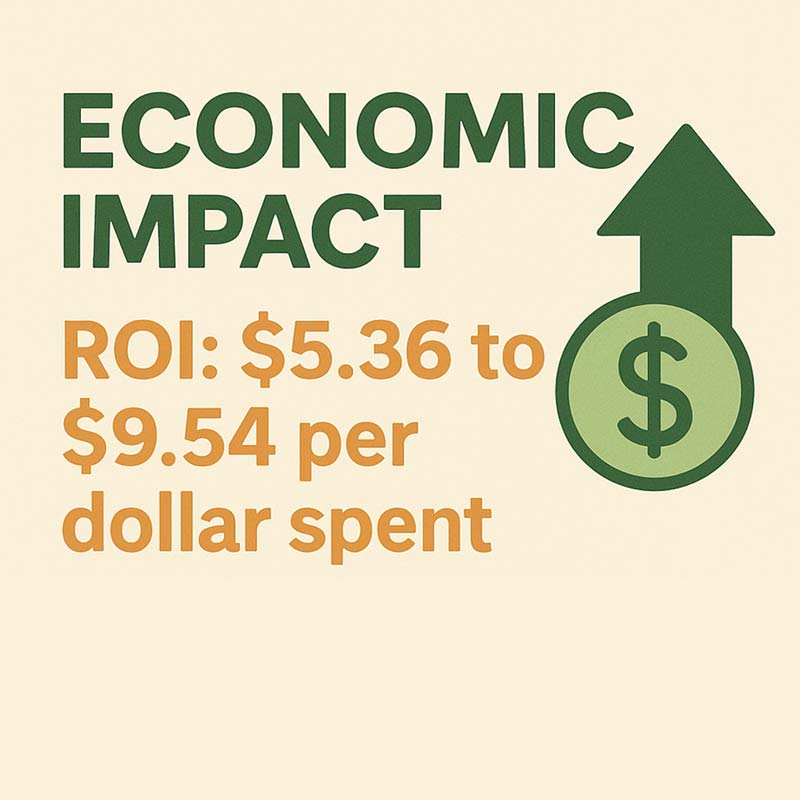
Cost-benefit analysis conducted for nutrition education in California:
A cost-benefit analysis was conducted using the program demographics and food-related dietary behavior of participants enrolled in California’s Expanded Food and Nutrition Education Program (EFNEP), based on methodology developed by Virginia Cooperative Extension.
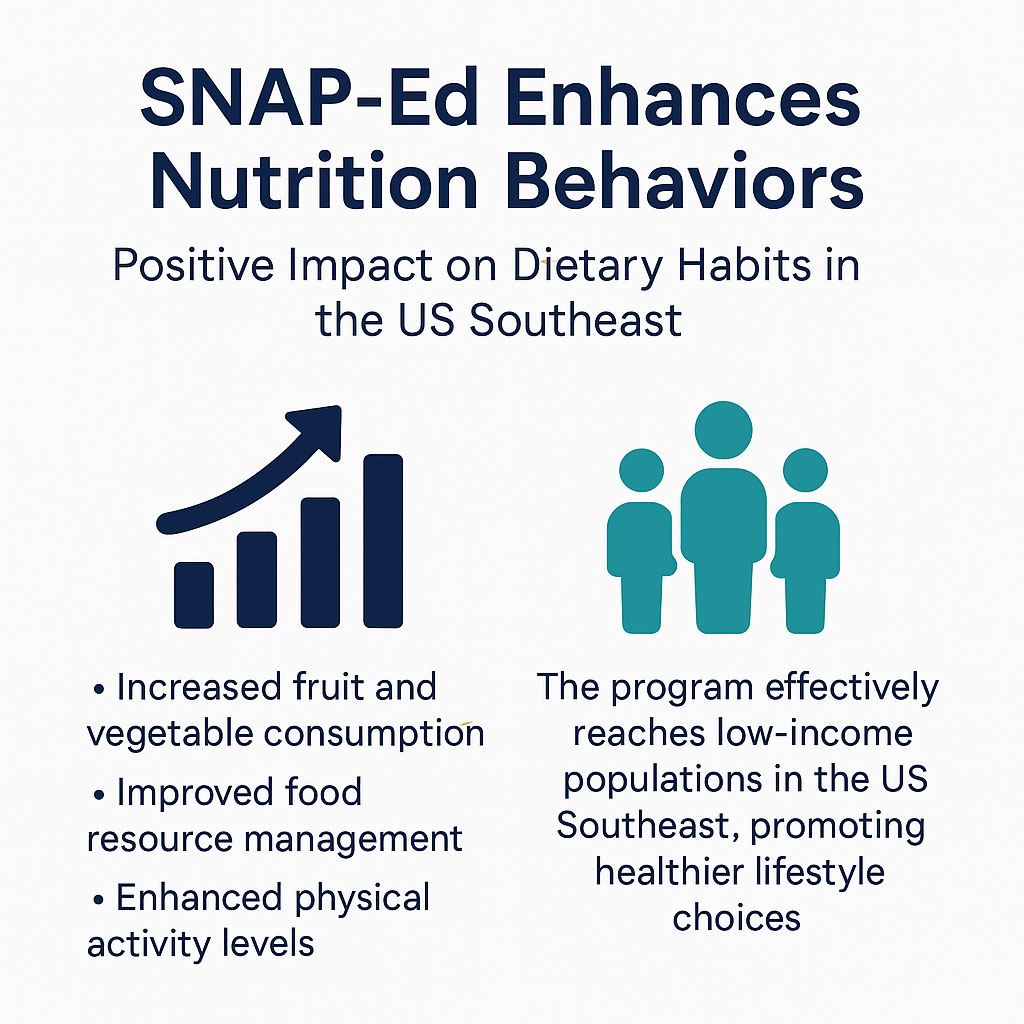
The US Supplemental Nutrition Assistance Program – Education improves nutrition-related behaviors
This study suggests that SNAP-Ed direct education is associated with positive behaviour changes in the US Southeast.
Supplemental Nutrition Assistance Program Education reductions during COVID-19 may have exacerbated health inequities
Woodward-Lopez, G., Esaryk, E. E., Hewawitharana, S. C., Kao, J., Talmage, E., & Rider, C. D. (2023).